
GET-THE-BEST-RATE

PAY OFF your Mortgage in ~7 YEARS!

Get Professional Advanced Mortgage Advice - FREE!
Reduce Interest cost by ~$248,000 on a $600,000, Mortgage.
GET STARTED

Master your Mortgage for Financial Freedom!

Working with Home Buyer's and Home Owner's in BC, and across Canada.

Follow My Three Step Plan

To Get The Ultimate Mortgage!

Get started right away

The best place to start is to connect with me directly. My commitment is to listen to your needs, assess your financial situation, provide professional mortgage advice, and guide you through the mortgage process.

Get clarity

Sorting through all the different mortgage lenders, rates, terms, and features can be overwhelming. Let me cut through the noise. I'll outline the best mortgage products available with your needs in mind.

Proceed with confidence

My goal is to make sure you know exactly where you stand at all times. From your initial application through your mortgage renewal, I'm available to answer any questions for as long as you need a mortgage. I've got you covered.

A man wearing a black shirt is smiling for the camera

Dean Garrett

As a seasoned Mortgage Pro, I will save you Money!

GET STARTED

Your Home Mortgage Interest is

NON-TAX DEDUCTIBLE

Convert your Home Mortgage into a

TAX-DEDUCTIBLE

loan AND pay off your mortgage in record time.

All without straining your current finances.

You don’t have to increase your required payment to ACHIEVE INCREDIBLE RESULTS!

LEARN MORE

Nice things people have said about working with me.

LEAVE A REVIEW ON FACEBOOK
A man in a suit and white shirt is smiling for the camera.

Your path to financial freedom starts today.

As a trusted Canadian Mortgage Broker and Smith Manoeuvre Certified Professional (SMCP), I help homeowners turn mortgage debt into long-term wealth.


I specialize in Smith Manoeuvre strategies, including cash damming and debt swaps, with tax-efficient mortgage planning.

A logo for the smith manoeuvre with a graph on it.
LEARN MORE

BUY THE BOOK

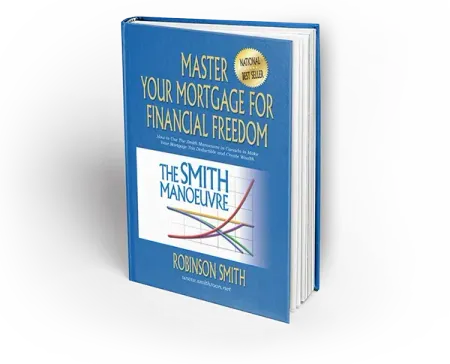
Why Read The Smith Manoeuvre?

If you have a mortgage in Canada, this book can show you how to turn it into a powerful wealth-building tool. Learn how to make your interest tax-deductible, pay off your mortgage faster, and invest for your future—without spending more or increasing your debt. It's a simple strategy with life-changing potential.
Learn more about it
A book titled master your mortgage for financial freedom

Smith Manoeuvre FAQs

  • What is the Smith Manoeuvre?

    The Smith Manoeuvre is a Canadian financial strategy that gradually converts non-deductible mortgage debt into tax-deductible investment debt. Using a readvanceable mortgage, you borrow available equity to invest in income-producing assets, while continuing to pay down your mortgage. Over time, you reduce non-deductible interest and build an investment portfolio.

  • Is the Smith Manoeuvre legal in Canada?

    Yes, when it’s structured correctly. The Canada Revenue Agency allows interest to be deducted when borrowed funds are used for the purpose of earning investment income. Accurate tracking, documentation, and correct setup are critical. As an SMCP®, I coordinate with your tax professional to ensure the strategy is applied appropriately.

  • Do I need a readvanceable mortgage to use the Smith Manoeuvre?

    Yes. A readvanceable mortgage combines a traditional mortgage with a HELOC. As you make payments, your available credit increases, allowing you to reinvest systematically. Without a readvanceable mortgage, the strategy cannot function as designed.

  • Who is the Smith Manoeuvre best suited for?

    It works best for disciplined homeowners who:


    • have a stable income
    • plan to own their home long-term
    • are comfortable with investing
    • pay income tax annually
    • want to build wealth more efficiently

    If cash flow is tight, risk tolerance is low, or timelines are short, we may explore alternatives or adjust the approach.


  • Is the Smith Manoeuvre risky?

    Like any investment strategy, there is risk. Investment values fluctuate, and interest rates can change. My role is to assess your cash flow, stress-test scenarios, and make sure the structure is conservative, transparent, and aligned with your tolerance and long-term plan.

  • How long before I see benefits?

    Many homeowners notice tax deduction benefits within the first couple of years. The real power compounds over 10 to 20+ years as investments grow and non-deductible mortgage interest shrinks. It’s a long-term strategy, not a quick-win tactic. The results are typically life-changing.

  • What types of investments are used?

    Generally, investments must have the potential to generate income (interest, dividends, rent, etc.). Common choices include professionally managed or self-managed portfolios, dividend-paying funds, or other market-based investments, guided by your investment advisor. Speculative investments typically don’t qualify.


  • Can I still make extra payments on my mortgage?

    Yes! And those extra payments accelerate the strategy. Each payment frees up more HELOC room, which can then be reinvested. Done correctly, your tax deductions increase while your non-deductible balance declines faster.

  • What if I move or sell my home?

    The strategy can continue if your next mortgage is appropriately structured. If you sell, we ensure everything is unwound correctly, interest remains traceable, and tax documentation is clean. Planning prevents missteps.

  • Is Cash Damming, or Rental Cash Damming, part of the Smith Manoeuvre?

    Yes! Five “Accelerators” can be applied to the Smith Manoeuvre. An accelerator will convert your non-tax-deductible mortgage debt to tax-deductible debt faster than simply using the “Plain Jane” strategy. As an SMCP®, I examine your current cash flow to determine which accelerators are available to you and demonstrate how significant the gains will be when applied.

  • Why work with an SMCP®?

    An SMCP® understands:


    • correct structure and lending options
    • CRA rules and interest traceability
    • investment and tax coordination
    • ongoing monitoring and documentation

    Most mortgages are not automatically set up to support the Smith Manoeuvre. My role is to help ensure yours is.


    This content is for educational purposes only. Always consult your tax professional and licensed investment advisor before implementing the Smith Manoeuvre.

Still have a question?

CONTACT ME

Get started by BOOKING A CALL WITH ME.

BOOK A CALL

I'll let you know exactly where you stand so you can proceed with confidence.

Download my Mortgage Toolbox App

What you can do with my app


Calculate your total cost of owning a home

Estimate the minimum down payment you need

Calculate Land transfer taxes and the available rebates

Calculate the maximum loan you can borrow

Stress test your mortgage

Estimate your Closing costs

Compare your options side by side

Search for the best mortgage rates

Email Summary reports (PDF)

Use my app in English, French, Spanish, Hindi, and Chinese

Everything you need, all in one place

As a trusted mortgage provider, let me help you with these services.

Click through any of the services to learn more

A living room with two chairs and a fireplace
Purchase
A living room with a couch and a coffee table
Refinance
A room with a plant on a table and a hat on a bench
Renewal
A man and a woman are sitting on the floor in front of cardboard boxes.
First Time Home Buyers
An apple laptop sits on a desk in front of a window
Self Employed
A kitchen with white cabinets and black stools
Next Home
A living room with a couch and a flat screen tv
Investment
A man and a woman wearing aprons are standing in a kitchen
Older Canadians
A woman and two children are sitting on a blue couch.
Divorce Mortgage

Mortgage articles to keep you informed.

A woman is standing in front of a family looking at a house.
By Dean Garrett January 15, 2026
Ready to Buy Your First Home? Here’s How to Know for Sure Buying your first home is exciting—but it’s also a major financial decision. So how can you tell if you’re truly ready to take that leap into homeownership? Whether you’re confident or still unsure, these four signs are solid indicators that you’re on the right path: 1. You’ve Got Your Down Payment and Closing Costs in Place To purchase a home in Canada, you’ll need at least 5% of the purchase price as a down payment. In addition, plan for around 1.5% to 2% of the home’s value to cover closing costs like legal fees, insurance, and adjustments. If you’ve managed to save this on your own, that’s a great sign of financial discipline. If you're receiving help from a family member through a gifted down payment , that works too—as long as the paperwork is in order. Either way, having these funds ready shows you’re prepared for the upfront costs of homeownership. 2. Your Credit Profile Tells a Good Story Lenders want to know how you manage debt. Before they approve you for a mortgage, they’ll review your credit history. What they typically like to see: At least two active credit accounts (trade lines) , like a credit card or loan Each with a minimum limit of $2,000 Open and active for at least 2 years Even if your credit isn’t perfect, don’t panic. There may still be options, such as using a co-signer or working on a credit improvement plan with a mortgage expert. 3. Your Income Can Support Homeownership—Comfortably A steady income is essential, but not all income is treated equally. If you’re full-time and past probation , you’re in a strong position. If you’re self-employed, on contract, or rely on variable income like tips or commissions, you’ll generally need a two-year history to qualify. A general rule: housing costs (mortgage, taxes, utilities) should stay under 35% of your gross monthly income . That leaves plenty of room for other living expenses, savings, and—yes—some fun too. 4. You’ve Talked to a Mortgage Professional Let’s be real—there’s a lot of info out there about buying a home. Google searches and TikToks can only take you so far. If you're serious about buying, speaking with a mortgage professional is the most effective next step. Why? Because you'll: Get pre-approved (and know what price range you're working with) Understand your loan options and the qualification process Build a game plan that suits your timeline and financial goals The Bottom Line: Being “ready” to buy a home isn’t just about how much you want it—it’s about being financially prepared, credit-ready, and backed by expert advice. If you’re thinking about homeownership, let’s chat. I’d love to help you understand your options, crunch the numbers, and build a plan that gets you confidently across the finish line—keys in hand.
A bunch of rolls of paper laying on top of a blueprint
By Dean Garrett January 8, 2026
How to Use Your Mortgage to Finance Home Renovations Home renovations can be exciting—but they can also be expensive. Whether you're upgrading your kitchen, finishing the basement, or tackling a much-needed repair, the cost of materials and labour adds up quickly. If you don’t have all the cash on hand, don’t worry. There are smart ways to use mortgage financing to fund your renovation plans without derailing your financial stability. Here are three mortgage-related strategies that can help: 1. Refinancing Your Mortgage If you're already a homeowner, one of the most straightforward ways to access funds for renovations is through a mortgage refinance. This involves breaking your current mortgage and replacing it with a new one that includes the amount you need for your renovations. Key benefits: You can access up to 80% of your home’s appraised value , assuming you qualify. It may be possible to lower your interest rate or reduce your monthly payments. Timing tip: If your mortgage is up for renewal soon, refinancing at that time can help you avoid prepayment penalties. Even mid-term refinancing could make financial sense, depending on your existing rate and your renovation goals. 2. Home Equity Line of Credit (HELOC) If you have significant equity in your home, a Home Equity Line of Credit (HELOC) can offer flexible funding for renovations. A HELOC is a revolving credit line secured against your home, typically at a lower interest rate than unsecured borrowing. Why consider a HELOC? You only pay interest on the amount you use. You can access funds as needed, which is ideal for staged or ongoing renovations. You maintain the terms of your existing mortgage if you don’t want to refinance. Unlike a traditional loan, a HELOC allows you to borrow, repay, and borrow again—similar to how a credit card works, but with much lower rates. 3. Purchase Plus Improvements Mortgage If you're in the market for a new home and find a property that needs some work, a "Purchase Plus Improvements" mortgage could be a great option. This allows you to include renovation costs in your initial mortgage. How it works: The renovation funds are advanced based on a quote and are held in trust until the work is complete. The renovations must add value to the property and meet lender requirements. This type of mortgage lets you start with a home that might be more affordable upfront and customize it to your taste—all while building equity from day one. Final Thoughts Your home is likely your biggest investment, and upgrading it wisely can enhance both your comfort and its value. Mortgage financing can be a powerful tool to fund renovations without tapping into high-interest debt. The right solution depends on your unique financial situation, goals, and timing. Let’s chat about your options, run the numbers, and create a plan that works for you. 📞 Ready to renovate? Connect anytime to get started!
A man is sitting at a table using a laptop and a cell phone.
By Dean Garrett January 1, 2026
Fixed vs. Variable Rate Mortgages: Which One Fits Your Life? Whether you’re buying your first home, refinancing your current mortgage, or approaching renewal, one big decision stands in your way: fixed or variable rate? It’s a question many homeowners wrestle with—and the right answer depends on your goals, lifestyle, and risk tolerance. Let’s break down the key differences so you can move forward with confidence. Fixed Rate: Stability & Predictability A fixed-rate mortgage offers one major advantage: peace of mind . Your interest rate stays the same for the entire term—usually five years—regardless of what happens in the broader economy. Pros: Your monthly payment never changes during the term. Ideal if you value budgeting certainty. Shields you from rate increases. Cons: Fixed rates are usually higher than variable rates at the outset. Penalties for breaking your mortgage early can be steep , thanks to something called the Interest Rate Differential (IRD) —a complex and often costly formula used by lenders. In fact, IRD penalties have been known to reach up to 4.5% of your mortgage balance in some cases. That’s a lot to pay if you need to move, refinance, or restructure your mortgage before the end of your term. Variable Rate: Flexibility & Potential Savings With a variable-rate mortgage , your interest rate moves with the market—specifically, it adjusts based on changes to the lender’s prime rate. For example, if your mortgage is set at Prime minus 0.50% and prime is 6.00% , your rate would be 5.50% . If prime increases or decreases, your mortgage rate will change too. Pros: Typically starts out lower than a fixed rate. Penalties are simpler and smaller —usually just three months’ interest (often 2–2.5 mortgage payments). Historically, many Canadians have paid less overall interest with a variable mortgage. Cons: Your payment could increase if rates rise. Not ideal if rate fluctuations keep you up at night. The Penalty Factor: Why It Matters More Than You Think One of the biggest surprises for homeowners is the cost of breaking a mortgage early —something nearly 6 out of 10 Canadians do before their term ends. Fixed Rate = Unpredictable, potentially high penalty (IRD) Variable Rate = Predictable, usually lower penalty (3 months’ interest) Even if you don’t plan to break your mortgage, life happens—career changes, family needs, or new opportunities could shift your path. So, Which One is Best? There’s no one-size-fits-all answer. A fixed rate might be perfect for someone who wants stable budgeting and plans to stay put for years. A variable rate might work better for someone who’s financially flexible and open to market changes—or who may need to exit their mortgage early. Ultimately, the best mortgage is the one that fits your goals and your reality —not just what the bank recommends. Let's Find the Right Fit Choosing between fixed and variable isn’t just about numbers—it’s about understanding your needs, your future plans, and how much financial flexibility you want. Let’s sit down and walk through your options together. I’ll help you make an informed, confident choice—no guesswork required.
A woman is standing in front of a family looking at a house.
By Dean Garrett January 15, 2026
Ready to Buy Your First Home? Here’s How to Know for Sure Buying your first home is exciting—but it’s also a major financial decision. So how can you tell if you’re truly ready to take that leap into homeownership? Whether you’re confident or still unsure, these four signs are solid indicators that you’re on the right path: 1. You’ve Got Your Down Payment and Closing Costs in Place To purchase a home in Canada, you’ll need at least 5% of the purchase price as a down payment. In addition, plan for around 1.5% to 2% of the home’s value to cover closing costs like legal fees, insurance, and adjustments. If you’ve managed to save this on your own, that’s a great sign of financial discipline. If you're receiving help from a family member through a gifted down payment , that works too—as long as the paperwork is in order. Either way, having these funds ready shows you’re prepared for the upfront costs of homeownership. 2. Your Credit Profile Tells a Good Story Lenders want to know how you manage debt. Before they approve you for a mortgage, they’ll review your credit history. What they typically like to see: At least two active credit accounts (trade lines) , like a credit card or loan Each with a minimum limit of $2,000 Open and active for at least 2 years Even if your credit isn’t perfect, don’t panic. There may still be options, such as using a co-signer or working on a credit improvement plan with a mortgage expert. 3. Your Income Can Support Homeownership—Comfortably A steady income is essential, but not all income is treated equally. If you’re full-time and past probation , you’re in a strong position. If you’re self-employed, on contract, or rely on variable income like tips or commissions, you’ll generally need a two-year history to qualify. A general rule: housing costs (mortgage, taxes, utilities) should stay under 35% of your gross monthly income . That leaves plenty of room for other living expenses, savings, and—yes—some fun too. 4. You’ve Talked to a Mortgage Professional Let’s be real—there’s a lot of info out there about buying a home. Google searches and TikToks can only take you so far. If you're serious about buying, speaking with a mortgage professional is the most effective next step. Why? Because you'll: Get pre-approved (and know what price range you're working with) Understand your loan options and the qualification process Build a game plan that suits your timeline and financial goals The Bottom Line: Being “ready” to buy a home isn’t just about how much you want it—it’s about being financially prepared, credit-ready, and backed by expert advice. If you’re thinking about homeownership, let’s chat. I’d love to help you understand your options, crunch the numbers, and build a plan that gets you confidently across the finish line—keys in hand.
A bunch of rolls of paper laying on top of a blueprint
By Dean Garrett January 8, 2026
How to Use Your Mortgage to Finance Home Renovations Home renovations can be exciting—but they can also be expensive. Whether you're upgrading your kitchen, finishing the basement, or tackling a much-needed repair, the cost of materials and labour adds up quickly. If you don’t have all the cash on hand, don’t worry. There are smart ways to use mortgage financing to fund your renovation plans without derailing your financial stability. Here are three mortgage-related strategies that can help: 1. Refinancing Your Mortgage If you're already a homeowner, one of the most straightforward ways to access funds for renovations is through a mortgage refinance. This involves breaking your current mortgage and replacing it with a new one that includes the amount you need for your renovations. Key benefits: You can access up to 80% of your home’s appraised value , assuming you qualify. It may be possible to lower your interest rate or reduce your monthly payments. Timing tip: If your mortgage is up for renewal soon, refinancing at that time can help you avoid prepayment penalties. Even mid-term refinancing could make financial sense, depending on your existing rate and your renovation goals. 2. Home Equity Line of Credit (HELOC) If you have significant equity in your home, a Home Equity Line of Credit (HELOC) can offer flexible funding for renovations. A HELOC is a revolving credit line secured against your home, typically at a lower interest rate than unsecured borrowing. Why consider a HELOC? You only pay interest on the amount you use. You can access funds as needed, which is ideal for staged or ongoing renovations. You maintain the terms of your existing mortgage if you don’t want to refinance. Unlike a traditional loan, a HELOC allows you to borrow, repay, and borrow again—similar to how a credit card works, but with much lower rates. 3. Purchase Plus Improvements Mortgage If you're in the market for a new home and find a property that needs some work, a "Purchase Plus Improvements" mortgage could be a great option. This allows you to include renovation costs in your initial mortgage. How it works: The renovation funds are advanced based on a quote and are held in trust until the work is complete. The renovations must add value to the property and meet lender requirements. This type of mortgage lets you start with a home that might be more affordable upfront and customize it to your taste—all while building equity from day one. Final Thoughts Your home is likely your biggest investment, and upgrading it wisely can enhance both your comfort and its value. Mortgage financing can be a powerful tool to fund renovations without tapping into high-interest debt. The right solution depends on your unique financial situation, goals, and timing. Let’s chat about your options, run the numbers, and create a plan that works for you. 📞 Ready to renovate? Connect anytime to get started!
A man is sitting at a table using a laptop and a cell phone.
By Dean Garrett January 1, 2026
Fixed vs. Variable Rate Mortgages: Which One Fits Your Life? Whether you’re buying your first home, refinancing your current mortgage, or approaching renewal, one big decision stands in your way: fixed or variable rate? It’s a question many homeowners wrestle with—and the right answer depends on your goals, lifestyle, and risk tolerance. Let’s break down the key differences so you can move forward with confidence. Fixed Rate: Stability & Predictability A fixed-rate mortgage offers one major advantage: peace of mind . Your interest rate stays the same for the entire term—usually five years—regardless of what happens in the broader economy. Pros: Your monthly payment never changes during the term. Ideal if you value budgeting certainty. Shields you from rate increases. Cons: Fixed rates are usually higher than variable rates at the outset. Penalties for breaking your mortgage early can be steep , thanks to something called the Interest Rate Differential (IRD) —a complex and often costly formula used by lenders. In fact, IRD penalties have been known to reach up to 4.5% of your mortgage balance in some cases. That’s a lot to pay if you need to move, refinance, or restructure your mortgage before the end of your term. Variable Rate: Flexibility & Potential Savings With a variable-rate mortgage , your interest rate moves with the market—specifically, it adjusts based on changes to the lender’s prime rate. For example, if your mortgage is set at Prime minus 0.50% and prime is 6.00% , your rate would be 5.50% . If prime increases or decreases, your mortgage rate will change too. Pros: Typically starts out lower than a fixed rate. Penalties are simpler and smaller —usually just three months’ interest (often 2–2.5 mortgage payments). Historically, many Canadians have paid less overall interest with a variable mortgage. Cons: Your payment could increase if rates rise. Not ideal if rate fluctuations keep you up at night. The Penalty Factor: Why It Matters More Than You Think One of the biggest surprises for homeowners is the cost of breaking a mortgage early —something nearly 6 out of 10 Canadians do before their term ends. Fixed Rate = Unpredictable, potentially high penalty (IRD) Variable Rate = Predictable, usually lower penalty (3 months’ interest) Even if you don’t plan to break your mortgage, life happens—career changes, family needs, or new opportunities could shift your path. So, Which One is Best? There’s no one-size-fits-all answer. A fixed rate might be perfect for someone who wants stable budgeting and plans to stay put for years. A variable rate might work better for someone who’s financially flexible and open to market changes—or who may need to exit their mortgage early. Ultimately, the best mortgage is the one that fits your goals and your reality —not just what the bank recommends. Let's Find the Right Fit Choosing between fixed and variable isn’t just about numbers—it’s about understanding your needs, your future plans, and how much financial flexibility you want. Let’s sit down and walk through your options together. I’ll help you make an informed, confident choice—no guesswork required.
Show More

Go ahead and schedule a meeting with me!

Mortgage FAQs for Canadian Homeowners

  • What’s the difference between using a bank and using a mortgage broker?

    Banks offer only their own mortgage products, and they often provide weak preapprovals. As a mortgage broker, I offer you access to multiple lenders, structures, and strategies, including readvanceable mortgages, refinancing options, debt-consolidation tools, and long-term planning support. And accurate preapprovals! My goal isn’t to sell a mortgage; it’s to be your debt advisor.

  • When should I consider refinancing my mortgage?

    Refinancing may make sense when you want to:


    • lower total borrowing costs
    • roll high-interest debt into lower mortgage rates 
    • access equity for investing or renovations
    • convert to a readvanceable structure

    I always calculate penalty costs versus benefits before moving forward.

  • What is a readvanceable mortgage?

    A readvanceable mortgage links a regular mortgage with a HELOC. As the mortgage balance decreases, available credit increases. This structure enables strategies like the Smith Manoeuvre and provides flexible access to home equity. Few homeowners make it through the entire amortization period without needing to access their equity to advance their goals.

  • Should I choose a fixed or variable rate?

    It depends on your:


    • risk tolerance
    • income stability
    • time horizon
    • likelihood of moving or refinancing
    • overall strategy (including tax planning)

    We review multiple scenarios so your rate decision aligns with your plan, not just today’s rate.


  • Is consolidating debt into my mortgage a good idea?

    It can be, if it reduces interest costs, improves cash flow, and prevents future debt buildup. The key is pairing consolidation with an intentional plan so the debt doesn’t reappear. We run numbers before making the decision.

  • Can my mortgage help me build wealth, not just pay debt?

    Yes, when structured intentionally. Using tools like readvanceable mortgages, disciplined investing, and tax-efficient strategies, your mortgage can become part of your wealth plan instead of just an expense. As a mortgage takes such a large part of your fiscal timeline, you can benefit from intentionally refinancing your loan over the repayment period. You can use your mortgage to both buy a home and build out your retirement needs.

  • How much down payment do I really need?

    In Canada:


    • 5% minimum on homes under $500,000
    • blended structure from $500,000 to $1,000,000, where it is 10% on the amount between $500,000 to $1,000,000.
    • 20% required on homes over $1,000,000, up to ~$1,500,000 depending on lender and location
    • Over $1,500,000 the down payment becomes 50% of the amount over.

    Your situation, credit, and goals determine the best approach, not just the minimum rules.


  • What costs should I expect when arranging a mortgage?

    Typical costs may include appraisal fees, legal fees, title insurance, transfer taxes, and possibly penalties if breaking an existing mortgage. We review everything upfront so there are no surprises, and I supply you with a full comprehensive breakdown of all your costs.

  • How often should my mortgage be reviewed?

    Ideally, once per year, and always at:


    • renewal time
    • major life changes
    • interest rate shifts
    • when tax or investment plans evolve

    Proactive reviews keep your mortgage aligned with your goals. You can use your Mortgage loan to achieve much more than just home ownership. Buying the home is the first step.

  • What’s the biggest mistake homeowners make?

    Treating the mortgage like a one-time transaction. The most successful homeowners think strategically, using their mortgage as a financial planning tool rather than just a loan to buy a house. The costs and timelines are too high and too long. My role is to help design and manage a long-term plan.


    I'm looking forward to hearing your thoughts on the above, and to making my web page the primary driver of new business for me.

Still have a question?

CONTACT ME